The Journey of the Koh-i-Noor Diamond
An excerpt from my book on how the Koh-i-Noor diamond went from Maharaja Ranjit Singh to the British crown.
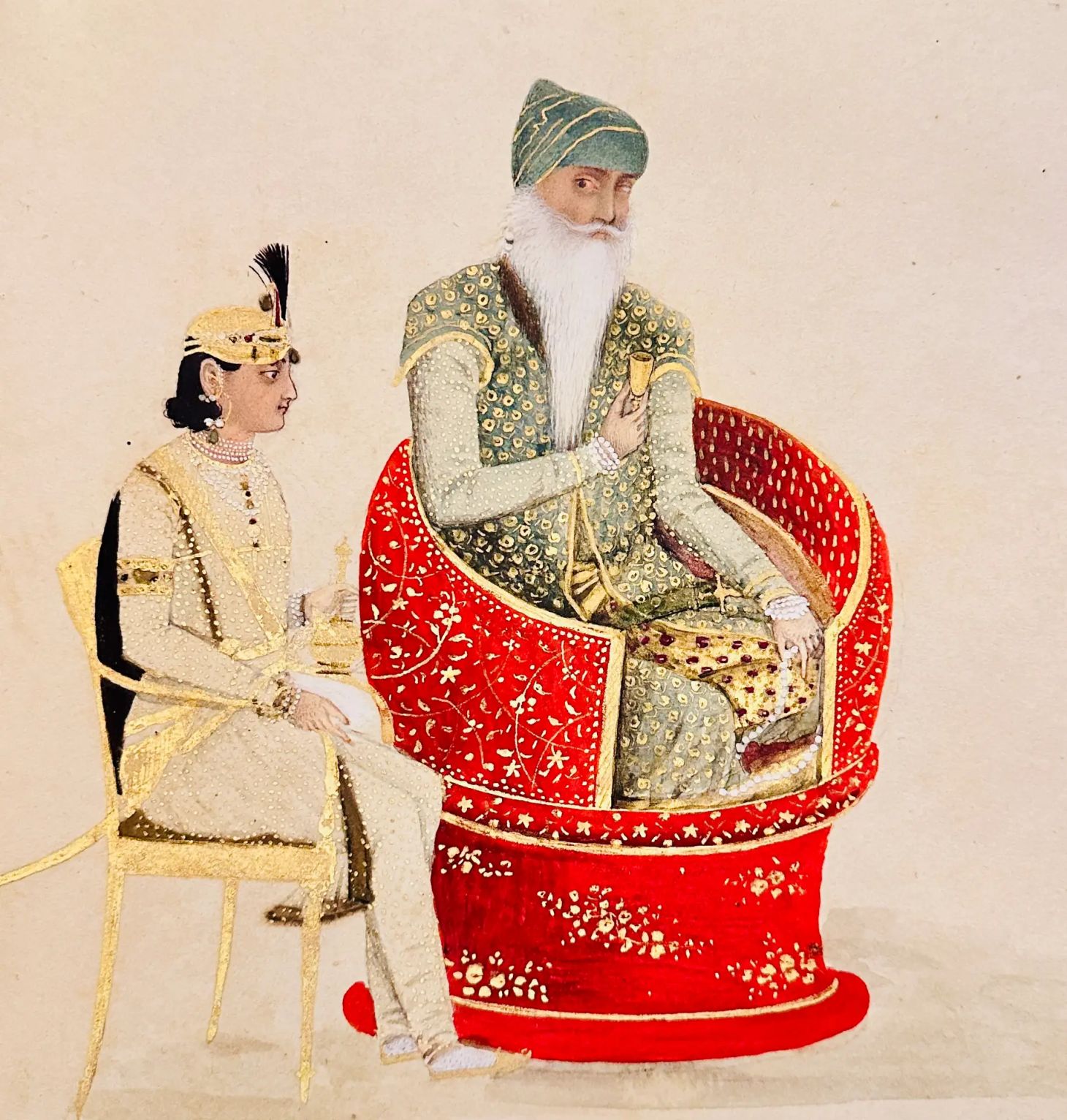
The Koh-i-Noor diamond entered written history in 1628, when the fifth Mughal emperor, Shah Jahan, commissioned a new, jewel-encrusted throne, to be modeled after the throne of King Solomon. The throne, which took seven years to complete and cost four times as much as the Taj Mahal (commissioned by Shah Jahan as a mausoleum for his wife), eventually became known as the Peacock Throne, after the jewel-encrusted peacock (or peacocks) that sat atop its gold canopy. While the gem-laden throne has long since been lost to history, we know that the Koh-i-Noor diamond was literally its crowning jewel.
When invading Persians, led by the notorious Nader Shah, sacked Delhi in 1739, marking the beginning of the end of the Mughal empire, Nader left the city with a staggering windfall of looted treasure—which required a caravan of seven hundred elephants, four thousand camels, and twelve thousand horses to transport it home—including the Peacock Throne and the Koh-i-Noor diamond. The diamond, now set in an armband and rumored to be cursed, passed from ruler to ruler over the course of seven bloody decades, until 1812, when its current owner, Shah Shuja Durrani, was imprisoned by his half-brother in a power play for the Afghan throne.
Shuja's wife, Wafa Begum, fled to Lahore and sought help from Maharaja Ranjit Singh, who agreed to free Shuja in exchange for the diamond. Ranjit also had imperial designs on Kashmir, where Shuja was being held. When Fateh Khan, another half-brother of Shuja who was scheming for control of the Afghan empire, proposed that the Sikhs join forces with his army to invade Kashmir in return for a share of the plunder, Ranjit agreed to send one of his top generals, Dewan Mokham Chand, to lead a Sikh contingent to Kashmir. But Fateh Khan double-crossed the Sikhs and rode off with all spoils, and when Chand’s men took Shuja back to Lahore, Ranjit found that he was no more eager to surrender his famed diamond than Fateh Khan had been to share Kashmir’s treasure. Shuja stalled for over a year, until Ranjit changed Shuja’s status from royal guest to prisoner. In June of 1813, Shuja finally handed over the Koh-i-Noor in an elaborate ceremony.