A Mother's Journey From Punjab to Cali | Part 2 of 3
Here is part 2's excerpt from my book about my mother's journey from her home in Punjab to start a new life with my father in America.
Here's Part 1 of 3.
And while my father’s parents would have forbidden him to leave their home and move into his own home in India, they had no reservations about him moving halfway across the world to America. They were proud of his accomplishment and pleased to have the bragging rights it gave them. Even in their wealthy, educated community, few had ventured so far and to such an esteemed destination, which they considered a paradise that promised unlimited opportunities and fortune. My father’s success was their success, and they would do nothing to stop him from leaving.
My father left for America on March 27, 1971. He shared an apartment with his friend in Berkeley while they both looked for work. They signed up for the American Chemical Society and scoured the job listings. Thanks to their work experience in India and sterling academic records, they managed to land jobs quickly. My father accepted a position as chief chemist in an Austin, Texas, factory that made polyvinyl chloride (PVC). This technology was later used to create prosthetic limbs for wounded soldiers returning home from Vietnam.
My father’s new employer gave him a warm welcome. They paid for his flight to Austin, met him at the airport, and provided him with a rent-free, fully furnished apartment. My father didn’t know anyone in Austin, so he looked up Indian names in the local phonebook and introduced himself. Soon, he had a small circle of friends.
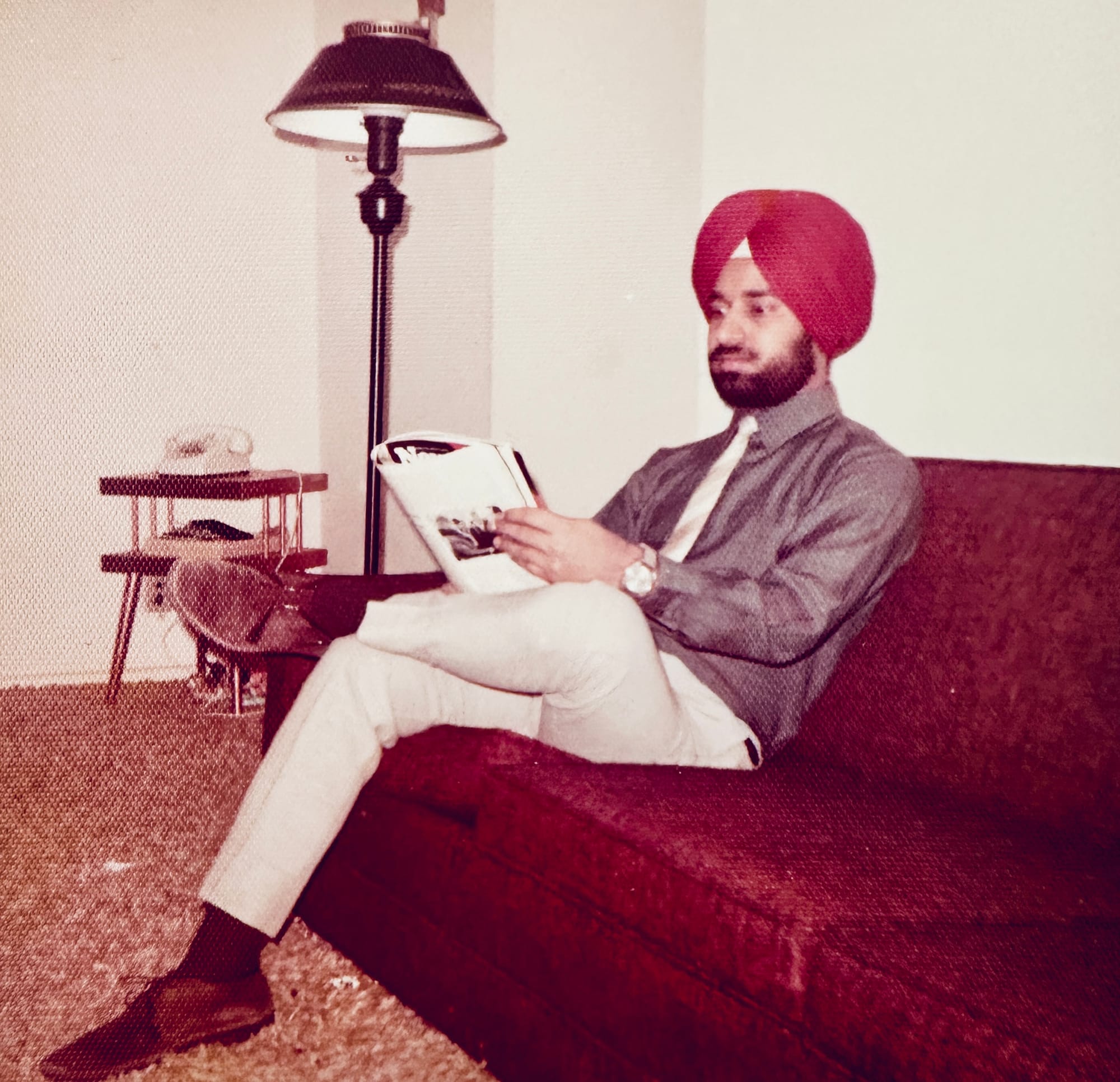
About a year later, my father was watching the news and learned that PVC was a possible carcinogen. He was alarmed and growing bored with Austin, so he started looking for jobs back in California. He applied for a process engineering position in Berkeley at a leading manufacturer of aluminum products. During the interview, the hiring committee noted his excellent spoken English and asked about his writing skills. My father handed them a copy of the English language chemistry book he’d published in India—they offered him the job.
He moved into an apartment complex in Berkeley where his friend from Lyallpur was living among others from Punjab. They’d get together for drinks on the weekends and marvel at the strange twists of fate that had landed them in new lives on the other side of the world. My father was happy. He had good friends, a great job, and Berkeley's sunny climate reminded him of Punjab. He wore his turban, but in early 1970s California, where the summer of love was hardly in the rearview mirror, no one looked at him askance. His new life was treating him well. The only thing missing was his wife and son.
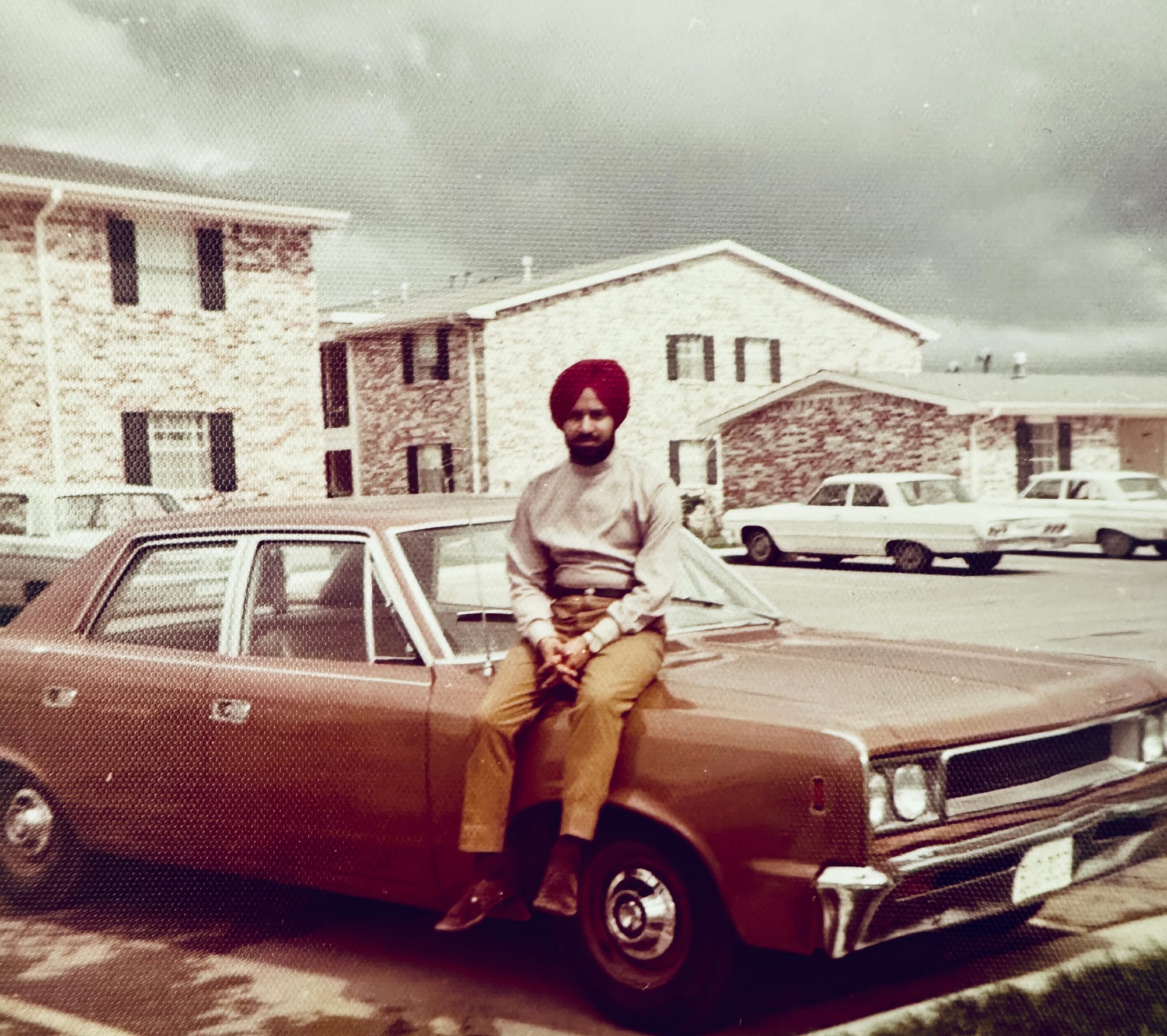
Back in Jalandhar, my mother was struggling to adjust to motherhood. She was given no advice or help from her mother-in-law and had to learn how to raise an infant herself. And if she hoped that giving birth to a grandson might have mitigated her mother-in-law’s zeal for household labor, she was sorely disappointed. Her workload seemed to be growing heavier by the day. My mother asked her in-laws if she could live at her father’s home in Panipat while she waited to join her husband in the US, but they refused, on the grounds that they wanted to spend time with their family’s first grandson.
Unlike everyone else in the household, my grandfather did try to connect with his son's wife on occasion. He knew she had a college degree and asked her to help with his business paperwork. Sometimes they played cards together. When my father wrote asking my mother to take typing lessons to help her find work in the US, my grandfather bought her a bicycle so she could ride to class instead of walking— a luxury that infuriated her mother-in-law. Her in-laws gave her a small stipend, but it was barely enough to cover personal expenses for her and her son, and she struggled to make ends meet. Unfortunately, her own father couldn’t help beyond slipping her a little cash whenever he came to visit because she was now her in-laws’ responsibility, dictated by cultural traditions. My father sent money from America, but my grandfather kept that money for himself.
Finally, almost a year and a half after my father had left for California, my mother’s visa was approved. Now there was only the matter of two international airline fares standing between her and a new life in California. My father didn’t have enough saved to cover their tickets, and my grandfather refused to contribute. My mother turned to her father, who happily bought two tickets for them, which would be her first time on an airplane. When her father-in-law found out, he was embarrassed because his daughter-in-law was his financial responsibility. To salvage his pride, he returned the tickets to her father and bought her a new pair. To avoid any further drama, my mother quietly asked her father for help buying new clothes and luggage.
As their departure neared, my mother's in-laws came to her with a request—let her two-year-old son stay with them in India. They would miss him tremendously, they explained, and India would be a better place to raise him. After the initial shock subsided, my mother found an inner resolve that had been dormant through years of submissive servitude. “No,” she told them, without equivocation. She would never leave her son behind. Her in-laws continued to badger her until the moment she boarded the plane with my brother.
It was only when the plane was speeding down the runway that my mother allowed herself to relax. Her stomach dropped as they lifted into the air. She watched her home recede and felt her old life falling away. Ahead of her was a long journey with a toddler and then the daunting prospect of building a new life in a foreign land, but as the plane lifted above the clouds and her son drifted off to sleep beside her, my mother felt only a wave of incredible relief, as though an immense weight had vanished from the center of her chest. She laughed out loud at the sudden feeling of buoyancy. For the first time in her life, it seemed like anything was possible.
Continue to Part 3
Punjab Now and Then Newsletter
Join the newsletter to receive the latest updates in your inbox.